Have you noticed small, silvery insects darting across your bathroom floor, hiding in your wardrobe or appearing near your bookshelves? These pests are commonly known as fish moths or silverfish, and they can become a persistent nuisance when they find suitable hiding places, food and moisture inside your home.
To get rid of fish moths, thoroughly vacuum affected areas, reduce excess moisture, remove clutter, protect paper and clothing in sealed storage, seal accessible gaps and monitor activity with suitable sticky traps. If fish moths continue appearing despite these measures, a professional inspection and targeted silverfish treatment may help address hidden harbourages.
In this guide, I will explain how to identify fish moths, why they enter homes, seven practical ways to control them and how to reduce the chance of another infestation.
What Are Fish Moths?
Fish moths are commonly known in Australia as silverfish. Despite the name, they are insects rather than moths. They have elongated, flattened bodies, silvery scales, long antennae and three tail-like appendages.
They are generally nocturnal, which means they are more active at night and often hide during the day. You may spot one when switching on a bathroom light, opening a cupboard or moving stored belongings.
Fish moths are attracted to starchy materials and other organic matter. They can feed on paper, book bindings, cardboard, wallpaper, some fabrics and food residues. Over time, their feeding can damage books, photographs, documents and clothing.
Although fish moths are not generally considered dangerous to people, their presence can indicate conditions that support a persistent pest problem.
How to Get Rid of Fish Moths in Melbourne? 7 Practical Steps
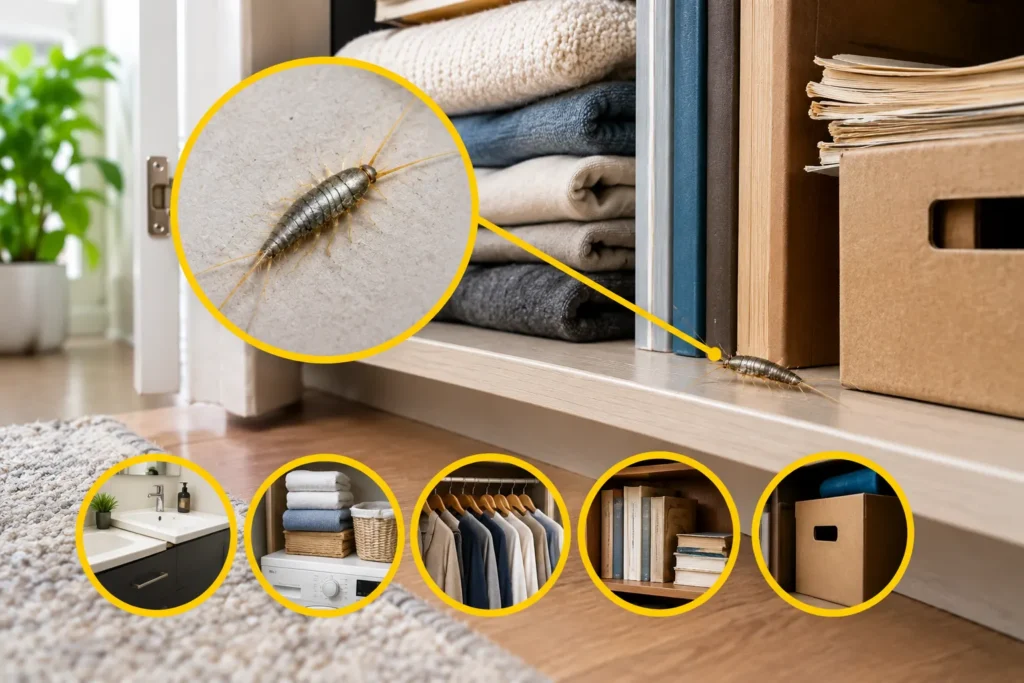
1. Identify Where Fish Moths Are Hiding
Start by inspecting the places where you have seen fish moths. Finding their hiding areas helps you focus your cleaning and monitoring efforts.
Check:
- Bathroom cupboards, vanity units and areas around plumbing.
- Laundry corners and other poorly ventilated spaces.
- Wardrobes, drawers and linen cupboards.
- Bookshelves, paper collections and storage boxes.
- Skirting boards, cracks and gaps around fixtures.
- Dark areas behind furniture and stored belongings.
Look for live insects, shed skins and small signs of damage to paper or fabrics. Fish moths can be difficult to locate because they hide in narrow gaps and undisturbed areas.
If you find them in several rooms, inspect the surrounding storage areas as well rather than concentrating on a single sighting.
2. Vacuum Floors, Cupboards and Hidden Corners
Regular, thorough vacuuming helps remove fish moths, dust, crumbs and other material that can provide food or shelter.
Pay particular attention to:
- Edges of carpets and skirting boards.
- Corners inside wardrobes and cupboards.
- Gaps beneath furniture.
- Spaces behind movable appliances, where safe to access.
- Drawer interiors and the undersides of shelves.
- Areas around stored books, boxes and paper.
Empty the vacuum according to the manufacturer’s instructions, preferably outdoors if the vacuum design allows it, and dispose of collected debris securely.
Vacuuming is a useful first step, but it may not reach insects or eggs concealed deep within cracks and inaccessible spaces. Combine it with moisture management, better storage and ongoing monitoring.
3. Reduce Moisture and Improve Ventilation
Moisture management is an important part of long-term fish moth prevention. Bathrooms, laundries and poorly ventilated storage spaces can provide favourable conditions.
To make these areas less suitable:
- Use an exhaust fan while showering and allow it to run as recommended.
- Repair leaking taps, pipes and other plumbing problems.
- Dry wet surfaces and investigate recurring condensation.
- Improve airflow in wardrobes and storage rooms.
- Use a suitable dehumidifier where excess humidity persists.
- Check for dampness around walls, cupboards and floors.
Do not assume that every fish moth problem is caused by a leak. These insects can survive in a range of indoor conditions, so moisture reduction works best alongside cleaning, storage improvements and inspection.
If you discover persistent dampness, investigate and correct the underlying cause rather than simply treating the visible symptoms.
4. Remove Clutter and Improve Storage
Cluttered storage areas provide undisturbed hiding places and can make fish moth activity harder to detect.
Sort through unused cardboard boxes, old packaging, newspapers and unnecessary paper collections. Keep important documents, photographs and books in dry conditions and use suitable sealed containers when practical.
For clothing and linen:
- Wash items when appropriate and ensure they are fully dry before storage.
- Avoid leaving piles of clothing undisturbed for long periods.
- Keep wardrobes organised so corners can be inspected and cleaned.
- Store vulnerable fabrics in clean, suitable containers.
For books and documents, avoid placing storage boxes directly against damp walls or on persistently damp floors. Check stored belongings periodically for signs of damage.
Good storage habits reduce potential food sources and make it easier to spot a developing problem before it becomes widespread.
5. Seal Accessible Cracks and Gaps
Fish moths can shelter in narrow crevices around the home. Sealing suitable gaps can reduce hiding places and limit access to some areas.
Inspect gaps around skirting boards, window frames, pipe penetrations and cupboard fittings. Use an appropriate sealant for the material and location, following the product instructions.
Before sealing a gap, consider whether it could be needed for ventilation, drainage, building movement or safe access to services. Do not block essential ventilation openings or seal over a moisture problem without addressing its cause.
Sealing gaps is a supporting measure rather than a complete solution. Fish moths may already be established inside cupboards, wall cavities or stored items.
6. Use Sticky Traps to Monitor Activity
Suitable insect sticky traps can help you determine where fish moths are most active.
Place traps in safe, accessible locations near suspected activity, such as beside skirting boards or inside storage areas where children and pets cannot reach them. Follow the manufacturer’s placement and handling instructions.
Check the traps regularly and record where insects are caught. This can help you identify hotspots and determine whether activity is declining after cleaning and moisture-control measures.
Remember that traps primarily help monitor and capture insects that encounter them. They do not necessarily eliminate insects hidden elsewhere or resolve the conditions allowing them to persist.
7. Consider Professional Silverfish Treatment if They Persist
If fish moths continue appearing after you have cleaned, improved storage and addressed excess moisture, the insects may be sheltering in areas that are difficult to reach.
A professional pest assessment can help identify likely harbourages, establish the extent of the activity and determine which control measures are appropriate for the property.
Depending on the findings, treatment may need to focus on specific cracks, concealed spaces, cupboards or other areas where fish moths are active. The correct approach depends on the building, the extent of the problem and the treatment products selected.
Pepi’s Pest Control provides Silverfish Treatment as part of its residential pest control services.
Always follow professional instructions and the label directions for any pest-control product. Do not combine household chemicals or apply insecticides to food, clothing, bedding or other surfaces unless the product is specifically approved for that use.
What Attracts Fish Moths to Your Home?
Fish moths are more likely to remain in places that offer food, shelter and suitable environmental conditions.
Common factors include:
Moisture and humidity: Damp or poorly ventilated areas can provide favourable conditions for silverfish.
Paper and cardboard: Books, paper, cardboard packaging and some adhesives can provide food or shelter.
Undisturbed storage: Cluttered cupboards, wardrobes and boxes offer places where insects can remain hidden.
Starchy food residues: Crumbs, food spills and accessible dry food may provide additional food sources.
Cracks and concealed spaces: Small gaps around fixtures and skirting boards provide shelter that ordinary surface cleaning may miss.
Removing one attractant may not solve the problem by itself. The best results usually come from combining cleaning, moisture control, sensible storage and monitoring.
How to Stop Fish Moths from Coming Back
Once you have reduced fish moth activity, maintain a routine that makes your home less suitable for them.
- Vacuum cupboards, storage spaces and skirting boards regularly.
- Keep bathrooms and laundries well ventilated.
- Fix leaks and investigate persistent dampness promptly.
- Store important papers, books and vulnerable belongings in dry conditions.
- Reduce unnecessary cardboard and paper clutter.
- Check wardrobes and storage boxes periodically.
- Monitor previously affected areas with suitable sticky traps.
- Arrange a professional assessment if activity continues or damage increases.
There is no single household method that guarantees fish moths will never return. Prevention is most effective when the conditions attracting them are addressed and hidden activity is monitored.
Are Fish Moths a Sign of a Dirty House?
No. Finding fish moths does not automatically mean your home is dirty.
They can occur in clean homes because they may find shelter in wall gaps, cupboards, bookshelves and stored belongings. Excess moisture, undisturbed storage and accessible food sources can make some areas more favourable, but an isolated sighting does not necessarily indicate a serious infestation.
Regular cleaning is helpful, although persistent activity may require a closer inspection to identify hidden harbourages.
When Should You Call a Pest Control Professional?
Consider professional pest control assistance if:
- You regularly see fish moths in multiple rooms.
- The insects continue appearing after thorough cleaning.
- You notice damage to books, photographs, documents or clothing.
- Fish moths are appearing in hard-to-access storage or concealed spaces.
- You cannot determine where the insects are hiding.
- You manage a property where recurring pest activity needs a more systematic response.
A professional can assess the problem and recommend an appropriate treatment and prevention plan. Results depend on the extent of the infestation, the areas that can be accessed and whether favourable conditions are corrected.
Professional Silverfish Treatment in Melbourne
Fish moths may be small, but repeated activity can be frustrating, particularly when they appear in wardrobes, bathrooms, bookshelves or valuable paper collections.
Pepi’s Pest Control offers Silverfish Treatment and residential pest control services, serving homes and businesses across Bayside Melbourne and Gippsland from its Moorabbin location.
If you have tried cleaning and prevention measures but continue finding fish moths, contact our team to discuss your pest control needs.
Say Goodbye to Fish Moths with Practical Prevention
Knowing how to get rid of fish moths starts with identifying where they hide and removing the conditions that allow them to thrive. Thorough vacuuming, moisture control, organised storage, sealing suitable gaps and monitoring activity can all help reduce the problem.
If fish moths continue returning, do not rely on repeated surface cleaning alone. Investigating hidden harbourages and choosing appropriate silverfish treatment can help you take a more targeted approach.
For professional pest management advice, visit Pepi’s Pest Control or call 0401 188 761 to discuss your requirements.
Frequently Asked Questions About Fish Moths
What is the fastest way to get rid of fish moths?
Start by vacuuming affected areas, removing clutter, reducing excess moisture and protecting vulnerable belongings in suitable sealed storage. Sticky traps can help monitor activity. If fish moths persist, a professional assessment may be needed to identify hidden harbourages.
Why do I keep finding fish moths in my bathroom?
Bathrooms can provide moisture, dark hiding places and gaps around plumbing or cupboards. Improve ventilation, repair leaks, dry wet surfaces and inspect the areas around the vanity and skirting boards. Repeated sightings may indicate a nearby hiding place.
Do fish moths bite humans?
Fish moths are not known for biting people and are generally considered a nuisance pest rather than a direct threat to human health. Their main concern is potential damage to paper, books, photographs, fabrics and other susceptible household materials.
Can fish moAre fish moths and silverfish the same thing?ths damage clothes and books?
Yes. Fish moths can feed on materials containing starches and other organic substances, including paper, book bindings and certain fabrics. They may leave irregular damage on susceptible items, so inspect stored belongings if you notice recurring activity.
Does vinegar kill fish moths?
Household vinegar should not be relied on as a complete fish moth treatment. Cleaning with an appropriate household cleaner may help remove residues, but it will not necessarily reach insects or eggs hidden in cracks and stored materials. Focus on inspection, vacuuming, moisture management and monitoring.
Do fish moths go away on their own?
They may disappear from view temporarily, but that does not prove the problem has been resolved. If suitable food and shelter remain available, fish moths may continue living and reproducing in concealed areas. Monitor the affected locations and address the conditions supporting them.
Are fish moths and silverfish the same thing?
In Australian household pest discussions, fish moth is a common name for silverfish. The insects are not true moths. Their distinctive silvery appearance and fish-like movement explain the familiar name.
When should I arrange professional fish moth treatment?
Consider professional treatment if sightings continue despite prevention efforts, activity appears in several rooms or you find damage to valuable belongings. A pest professional can assess the extent of the problem and recommend suitable control measures.